
Vintage Style Watches for Men Inspired by the Golden Age of Casinos
Vintage watches for men have always carried more weight than the time they keep. They are objects shaped by the hands that made them and the rooms they were made for — and few rooms demanded more of a timepiece than the great casino salons of the mid-20th century. From the 1940s through to the early 1980s, the gambling establishments of Monte Carlo, Las Vegas, and Macau set the terms for how a well-dressed man presented himself. The watch on his wrist was part of that conversation whether he intended it to be or not.
At the baccarat table or beside the roulette wheel, a watch was a statement of taste, background, and self-assurance. It suggested where he had been, what he valued, and how carefully he approached the rituals of social life. That tradition continues today among collectors who recognise that the finest vintage watches are not merely instruments but enduring objects of style — much like the thoughtful, composed approach players bring to the games themselves at Glitz Bets.
The Influence of Casino Culture on Vintage Watches for Men
The great casinos of the mid-20th century were environments where presentation mattered. Dress codes were strictly observed, particularly in European venues such as the Salon Privé in Monte Carlo. In Las Vegas, hotels like the Sands and the Flamingo hosted international clientele who treated personal style as part of the experience. Within these settings, every element of a man's attire conveyed meaning — and the watch often communicated the most.
Watchmakers understood this cultural context. In the postwar decades, Swiss manufacturers devoted considerable attention to producing watches that would perform visually as well as mechanically within the lighting and atmosphere of casino interiors. Vintage style watches for men from this era were designed with slim profiles that slipped easily beneath a dress shirt cuff, polished cases that reflected ambient light without excessive flash, and clear dials that allowed the wearer to check the time discreetly without interrupting the rhythm of an evening.
The influence worked in both directions. Casino culture generated demand for refined timepieces, and watchmakers responded with designs that became lasting symbols of mid-century elegance. Brands such as Rolex, Omega, Jaeger-LeCoultre, and Longines introduced references that are now considered foundational to classic men's watch design. Many of these watches were first worn in the very salons where fortunes changed hands across green felt tables.
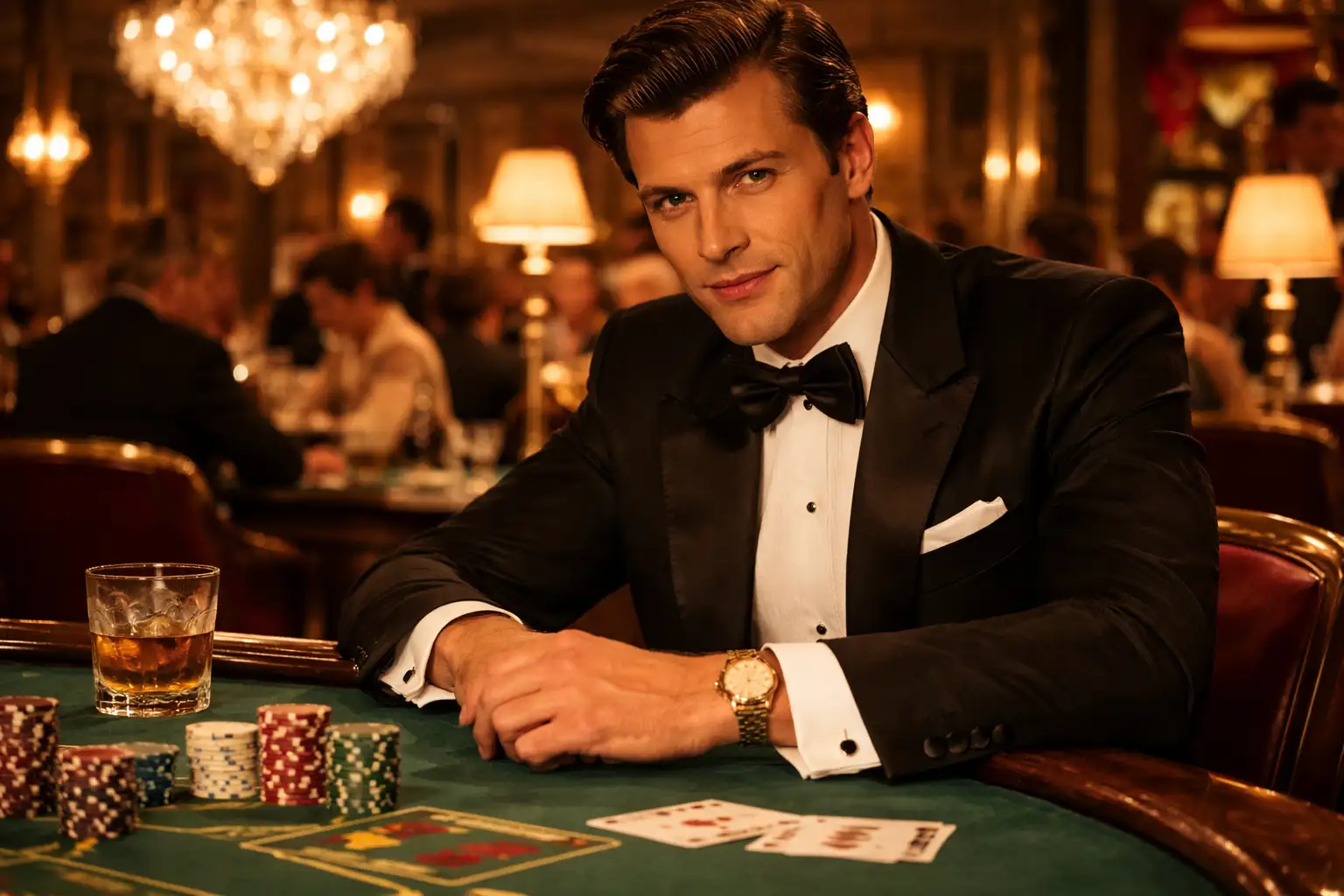
Why Vintage Classic Watches for Men Became Symbols of Casino Elegance
Casino elegance in the mid-20th century relied on a carefully balanced visual language. A tailored dinner jacket, polished shoes, understated accessories — each component contributed to an impression of effortless composure. Within that framework, the wristwatch held a unique position. It was practical yet decorative, consulted regularly yet subtle enough to remain part of the background.
Vintage classic watches for men from this era reflect that balance. Cases were typically crafted in yellow or white gold, polished but not extravagant. Dials favoured restraint: applied hour markers instead of printed numerals, slim baton hands, and minimal text beyond the maker's signature. The overall effect was refinement without obvious display, precisely the tone that casino environments favoured.
In the casino's golden age, the watch a man wore was the one accessory he chose entirely for himself — not for fashion, not for display, but as a private measure of who he was and what he considered worth carrying through the world.
Several watches from this period have achieved iconic status among collectors:
| Reference | Maker | Era | Casino Credentials |
|---|---|---|---|
| Datejust Ref. 6305 | Rolex | 1950s | Favoured by high-rollers on the Côte d'Azur circuit |
| Constellation Pie-Pan | Omega | 1950s–1960s | Popular among European casino regulars |
| Memovox Ref. E869 | Jaeger-LeCoultre | 1950s | Seen frequently in Monte Carlo social circles |
| Flagship Ref. 1690 | Longines | 1960s | Elegant yet accessible choice for Las Vegas visitors |
| Calatrava Ref. 2526 | Patek Philippe | 1950s–1960s | Widely regarded as the definitive dress watch of the era |
What makes vintage gold watches for men from this period so enduring is not material alone. The coherence of their design — proportions, dial texture, case geometry, bracelet integration — was the result of careful resolution at every level. That quality of visual balance is precisely what remains so difficult to replicate today, and it explains why the best examples continue to rise in collector esteem year after year.
Vintage Pocket Watches for Men and the Tradition of Classic Gentlemen
Long before the wristwatch became standard, the pocket watch was the measure of a man's relationship with time — and with the craft of the people who made it. Its retrieval from the waistcoat pocket, its brief consultation, its careful return: these were gestures with their own grammar, performed in drawing rooms, at dining tables, and in the private card rooms of the great European houses. In that earlier casino world, the pocket watch was as much a prop of composure as a practical instrument.
Vintage pocket watches for men from the late 19th and early 20th centuries represent some of the most technically accomplished portable objects ever produced. Hunter-case and open-face examples from Patek Philippe, A. Lange & Söhne, IWC, and Vacheron Constantin contained movements of remarkable complexity — minute repeaters, perpetual calendars, split-seconds chronographs — assembled by hand to a standard that remains impressive by any measure. Cases in yellow or white gold were frequently engraved with patterns of considerable intricacy, making each piece singular rather than interchangeable.
In gambling culture, the pocket watch carried a particular resonance. Withdrawing it slowly, checking it without urgency, returning it without comment — this was a performance of composure at precisely the moments when composure mattered most. At tables where the projection of calm was worth real money, the pocket watch was a competitive tool as well as a timekeeper. The best players understood this, and they chose their watches accordingly.
A fine pocket watch in the waistcoat pocket of a composed man at the card table communicated something no wristwatch ever quite could — the suggestion that time itself was of secondary concern to the quality of the moment.
Today, vintage pocket watches for men occupy a specialist corner of the collector market that rewards patience and genuine knowledge. The finest examples from the great Swiss and German houses appear at auction with estimates that reflect both mechanical complexity and historical standing. For collectors willing to engage seriously with hallmarking conventions, movement finishing grades, and case condition assessment, they represent some of the most rewarding objects in the entire field of horological collecting.
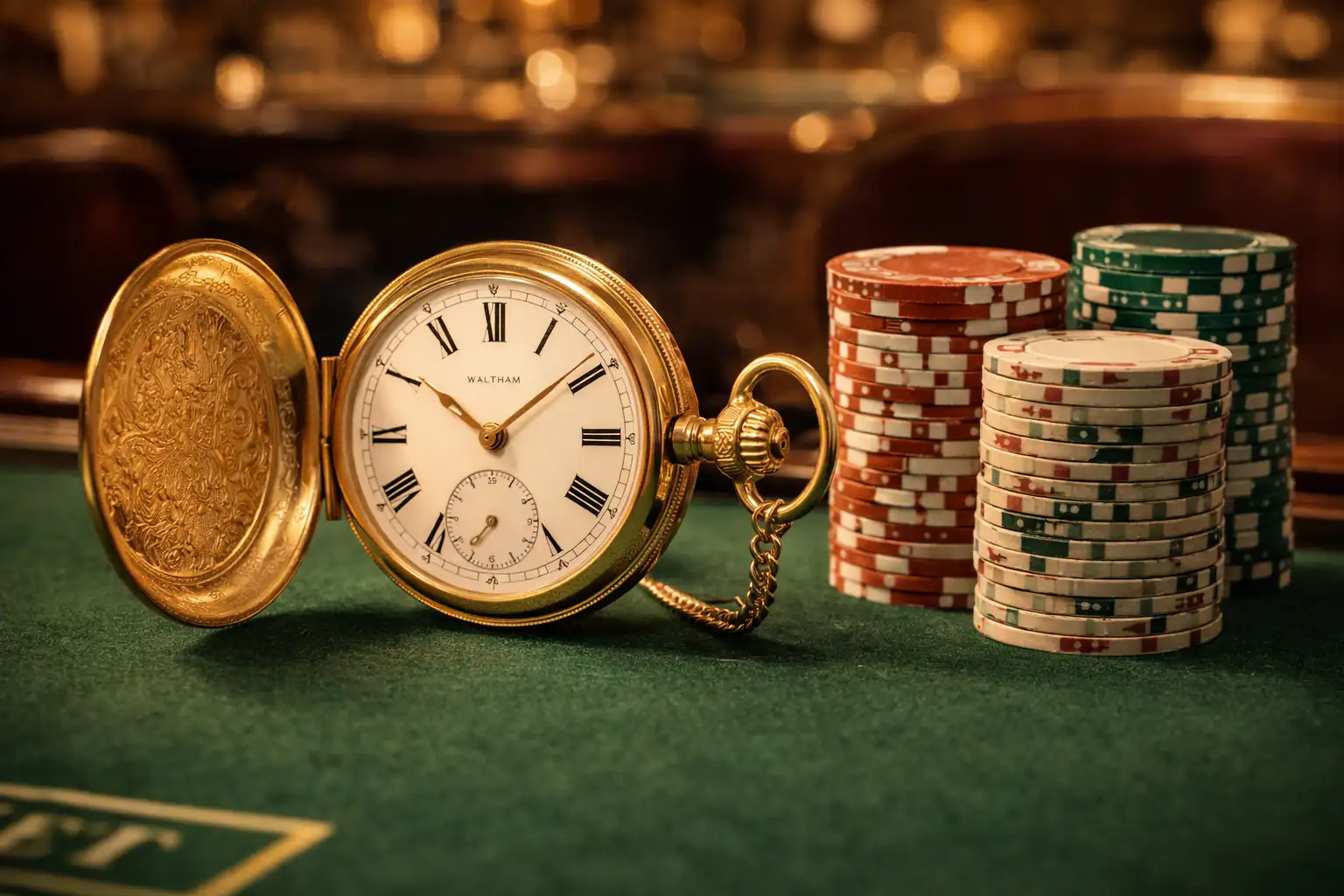
Best Vintage Watches for Men and the Lasting Beauty of Classic Timepieces
Identifying the best vintage watches for men is not a question with a single answer. The field is genuinely broad, and the qualities by which a watch might be judged excellent — mechanical refinement, design clarity, historical significance, condition, rarity, provenance — are numerous and sometimes pull in different directions. What one collector prizes above all others, another may weigh differently. That breadth is part of what makes serious collecting so absorbing over the long term.
The beauty of vintage watches for men is not decoration applied to a functional object — it grows from design decisions made under particular conditions by makers who understood the relationship between form and purpose with unusual precision. The references that collectors continue to seek out decades after production are those in which every resolved element — case outline, dial composition, hand geometry, bracelet weight — contributes to a coherent whole. They do not appear designed so much as settled, as if the form had been waiting to be discovered rather than invented.
For those beginning a collection, vintage classic watches for men offer genuine entry points at a range of price levels. Dress watches from Longines, Omega, Tissot, and Movado produced through the 1950s, 1960s, and 1970s can still be found in honest original condition at prices proportionate to their quality. At the other end of the market, signed pieces from Patek Philippe, early Rolex sport references, and complex pocket watches from A. Lange & Söhne command prices at major auction that reflect decades of collector agreement about their place in the history of the craft.
- Confirm dial originality before any purchase — a refinished dial reduces both value and historical integrity significantly
- Learn to read case hallmarks — gold content, assay office marks, and maker's stamps provide essential provenance information
- Request service documentation where it exists — recent work by a qualified watchmaker adds confidence and supports value
- Check bracelet or strap completeness — original bracelets for mid-century references are increasingly scarce and expensive to source
- Cross-reference reference numbers against published catalogues before committing to a price
- Handle pieces directly wherever the opportunity arises — auction previews and specialist dealers develop the eye in ways that photographs cannot
- Factor specialist insurance into the cost of any significant acquisition — replacement values for fine vintage pieces rise steadily
The enduring appeal of vintage style watches for men cannot be separated from the contexts that produced them. The casino floor, the private club, the formal dining room — these were the rooms in which mid-century watches were worn, compared, and understood. To collect them today is to recover something of those rooms: the quality of attention they demanded, the standard of craft they rewarded, and the belief that how a man presented himself to the world was a matter worth taking seriously. For collectors who bring that same seriousness to the pursuit, these objects offer something no new purchase can replicate — a direct, physical connection to a world of considered elegance that still speaks clearly across the decades.