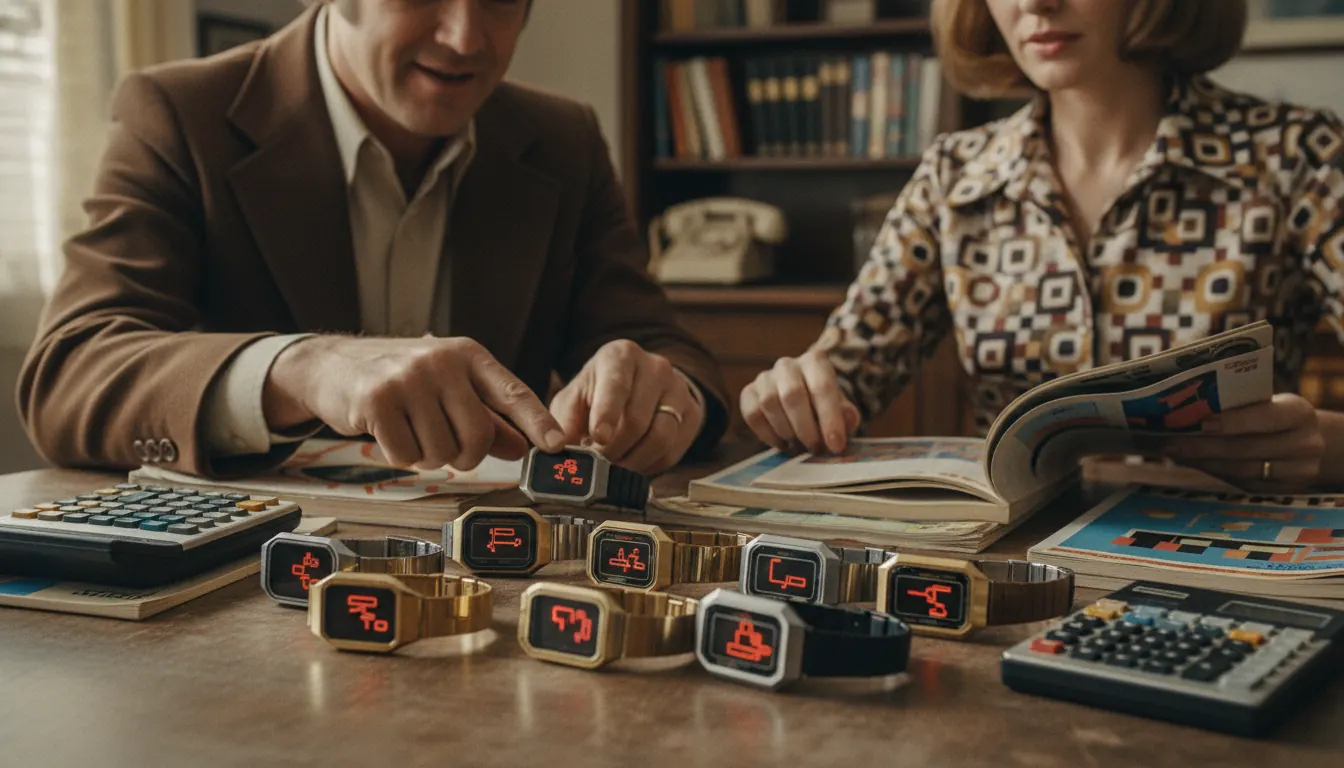
LED Watches From the Golden Age of Digital Time
The 1970s witnessed a revolution in timekeeping when LED watches introduced digital displays to consumer wrists. Japanese manufacturers led this innovation, creating timepieces with stainless steel cases and bold red displays that captured the decade's futuristic optimism. Understanding LED watch history helps collectors appreciate these technological marvels that briefly dominated watchmaking before LCD technology offered superior battery efficiency. Today's collectors seek working examples of these groundbreaking timepieces that represent a pivotal moment in horological evolution.
Japanese Innovation in LED Technology
Japanese manufacturers, particularly Seiko and Citizen, drove LED watch development through aggressive research and engineering investment. The Pulsar Time Computer, launched in 1972, became the first commercially available LED watch, featuring technology that seemed like science fiction. These companies prioritized miniaturization and power efficiency, gradually improving battery life while maintaining display brightness. Competition between Japanese and Swiss manufacturers accelerated innovation, though high production costs initially limited LED watches to premium pricing tiers.
- Pulsar's 1972 launch introduced the world's first LED watch with push-button activated display
- Japanese manufacturers invested heavily in semiconductor technology for improved efficiency
- Stainless steel cases became standard for durability and modern aesthetic appeal
- Red LED displays used gallium arsenide phosphide compounds for brightness and visibility
- Limited battery life required button activation rather than continuous display illumination
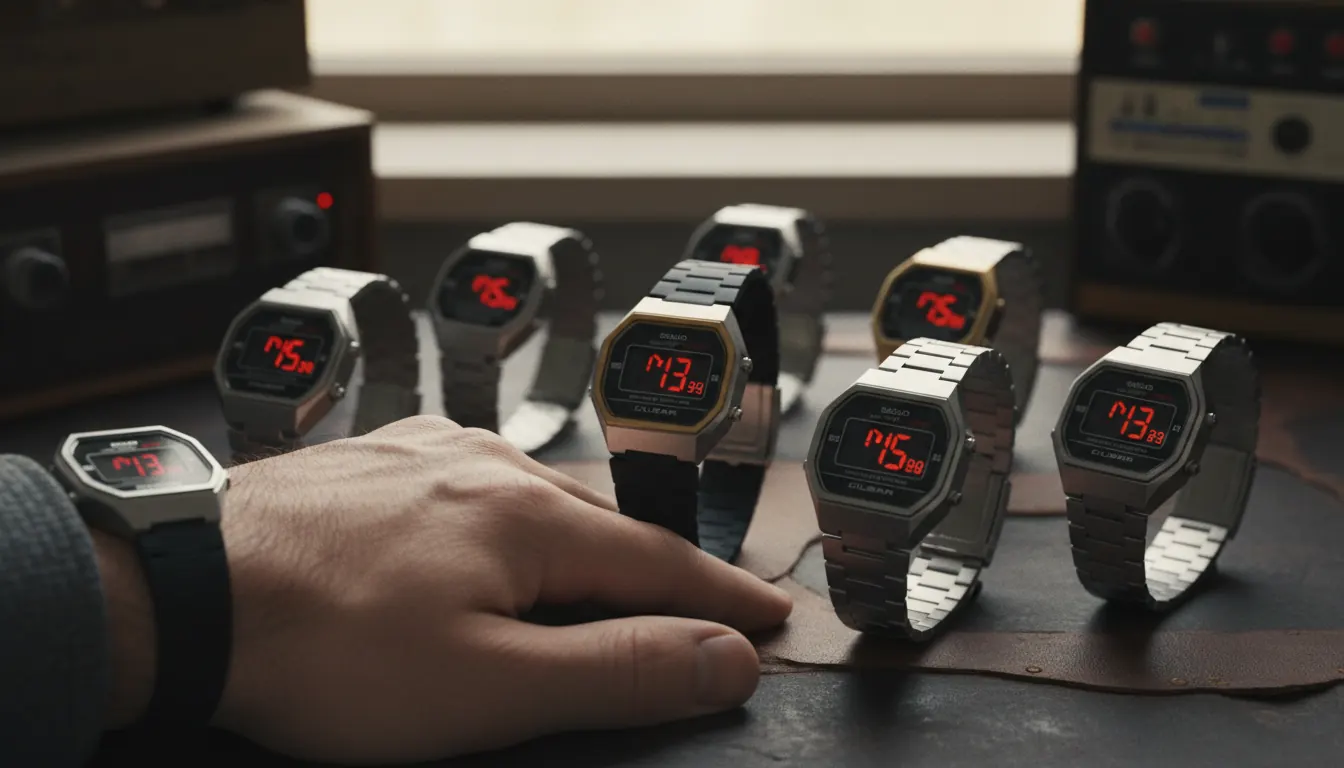
LED vs LCD Technology Comparison
Understanding why LCD technology eventually displaced LED watches provides important historical context for collectors. This comparison highlights key differences:
| Technology | Advantages | Limitations |
|---|---|---|
| LED | Dramatic visual impact, bright displays | High power consumption, button activation needed |
| LCD | Continuous display, superior battery life | Less dramatic appearance, viewing angle issues |
| Modern LED | Improved efficiency, smartwatch applications | Still higher power draw than LCD |
"LED watches represented the brief moment when digital time looked genuinely futuristic—a crystalline red glow that promised tomorrow had finally arrived on your wrist."
Collecting LED Watches Today
Working LED watches with original displays command premium prices as functional examples become increasingly rare. Collectors should verify that displays illuminate properly and that cases show appropriate age-related wear rather than excessive restoration. Battery compartment corrosion presents the primary risk, making examples with clean electrical contacts particularly valuable. The distinctive 1970s styling makes LED watches instantly recognizable, contributing to their appeal among collectors seeking timepieces that capture period aesthetics.